
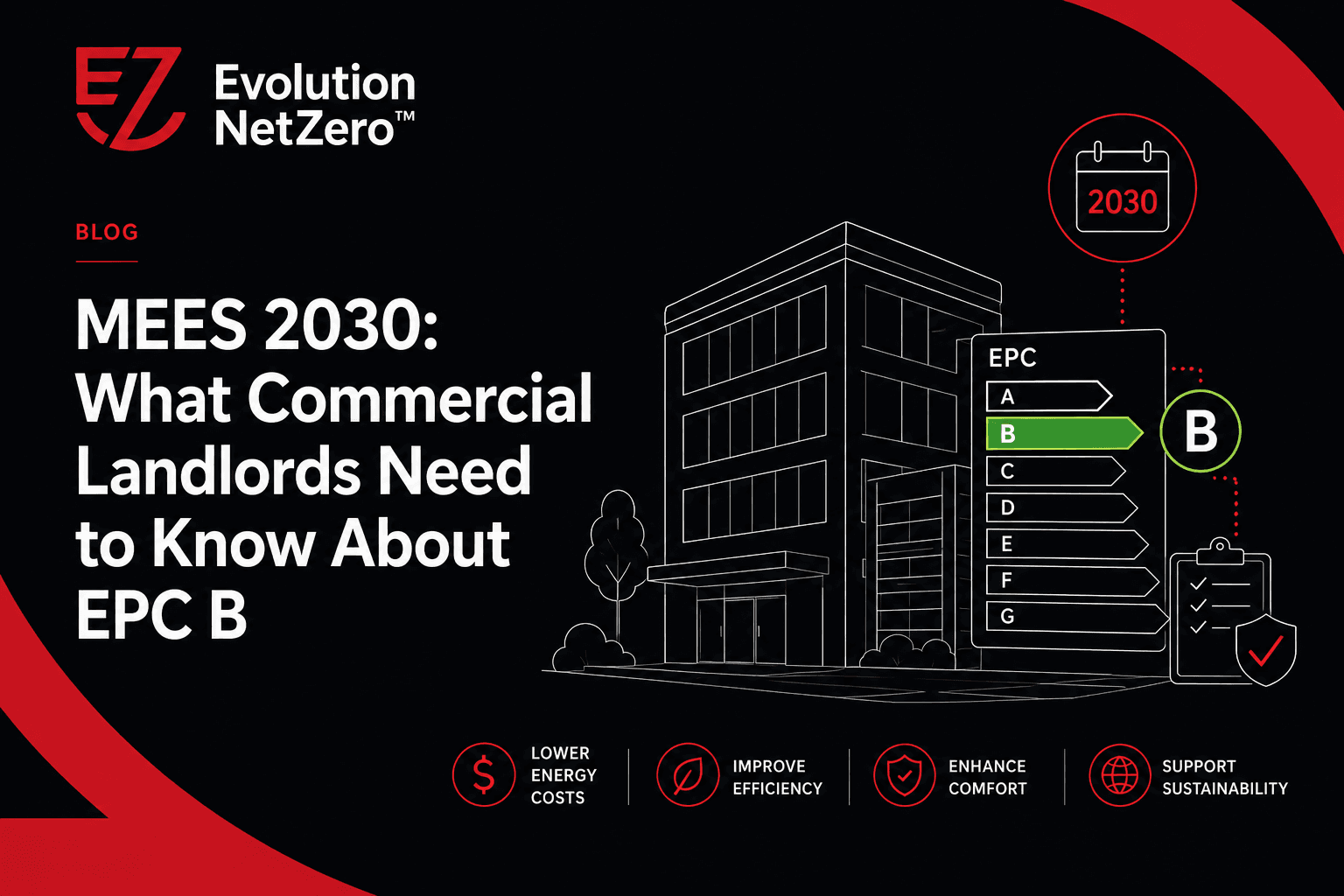
Updated June 2026: MEES rules have changed
The proposed 2030 EPC B deadline for all commercial lets no longer applies as originally set out. Under the revised framework, larger rented buildings over 1,000m² are on a confirmed path to EPC B by 2031. Smaller properties are expected to follow on a phased timeline. The core advice in this article remains sound: reduce energy waste now, improve the asset, and avoid rushed capital spend as the deadline approaches. We are updating this article in full shortly.
Current MEES regulations already prevent commercial landlords from letting properties below EPC E. Proposed changes would raise the minimum to EPC B by 2030, affecting an estimated 60 to 70 percent of existing commercial property stock. For landlords who have not started planning, the deadline is closer than it looks.
What the Current MEES Position Is
From 1 April 2023, it has been unlawful to let a commercial property with an EPC rating of F or G, even on lease renewal. Enforcement penalties can reach £150,000 for non-compliant lettings. The regulations apply to all commercial lettings in England and Wales, with limited exemptions for listed buildings and properties where improvement works are not technically or financially viable.
What the Proposed 2030 Changes Mean
The government has proposed that all commercially let properties must achieve EPC B by 2030. This is a significant step change from the current EPC E minimum. Many buildings that currently comply, including properties at EPC C or D, would need further improvement. The capital requirement across the existing commercial property stock is substantial.
Why the Timeline Is Shorter Than It Looks
Achieving EPC B from EPC C or D is not a simple low-cost intervention. It typically requires a combination of fabric improvements (insulation, glazing, airtightness), HVAC replacement or significant upgrade, and in some cases renewable energy installation. Planning and procuring this work takes time, particularly for occupied buildings where works need to be phased around tenants.
Landlords who start assessment in 2025 or 2026 have the most options and the lowest implementation cost. Those who leave it to 2029 will face higher costs, compressed timelines and potential stranded asset risk.
What a MEES Compliance Assessment Covers
A commercial landlord energy management assessment for MEES compliance identifies your current EPC rating and the specific measures needed to achieve EPC B, the capital cost and payback period of each measure, which improvements fall within typical service charge recovery, and the implementation sequence that minimises disruption to tenants.
The ESOS Connection
For landlords whose organisations qualify for ESOS (250 or more employees or £44 million or more turnover), a MEES compliance assessment can often be integrated with the ESOS Phase 3 requirement, reducing the total cost of both. See our ESOS compliance support page for more detail, or our commercial energy diagnostic page to understand what an assessment covers.
Frequently Asked Questions
What is the proposed MEES 2030 standard for commercial properties?
Under proposed regulations, commercial landlords in England and Wales would need an EPC rating of B or above to legally let their properties from 2030. This is a significant step up from the current minimum of EPC E that has applied to new leases since April 2023.
What happens if a commercial property cannot reach EPC B by 2030?
Under proposed legislation, landlords would not be able to let or continue letting a property below EPC B without a registered exemption. Properties that cannot be let represent a direct financial liability and a potential write-down in asset value, particularly for leveraged portfolios.
How much does it cost to improve a commercial EPC rating to B?
The cost varies significantly depending on the current rating and the building age and condition. The most cost-effective route to EPC B typically combines LED lighting, HVAC controls upgrades and fabric improvements. A desktop energy assessment establishes the current position and the most efficient path to the target rating.
For landlords looking to understand their current EPC position and plan the most cost-effective route to compliance, our commercial landlord energy management service is the practical starting point.
Related reading: the ESOS Phase 3 deadline guide.
Want to know exactly where your building is wasting energy?
Get a free Cost & Energy Waste Report — a desktop review of your building’s energy use delivered in 3 working days. No site visit. No obligation.
Leave a Reply