
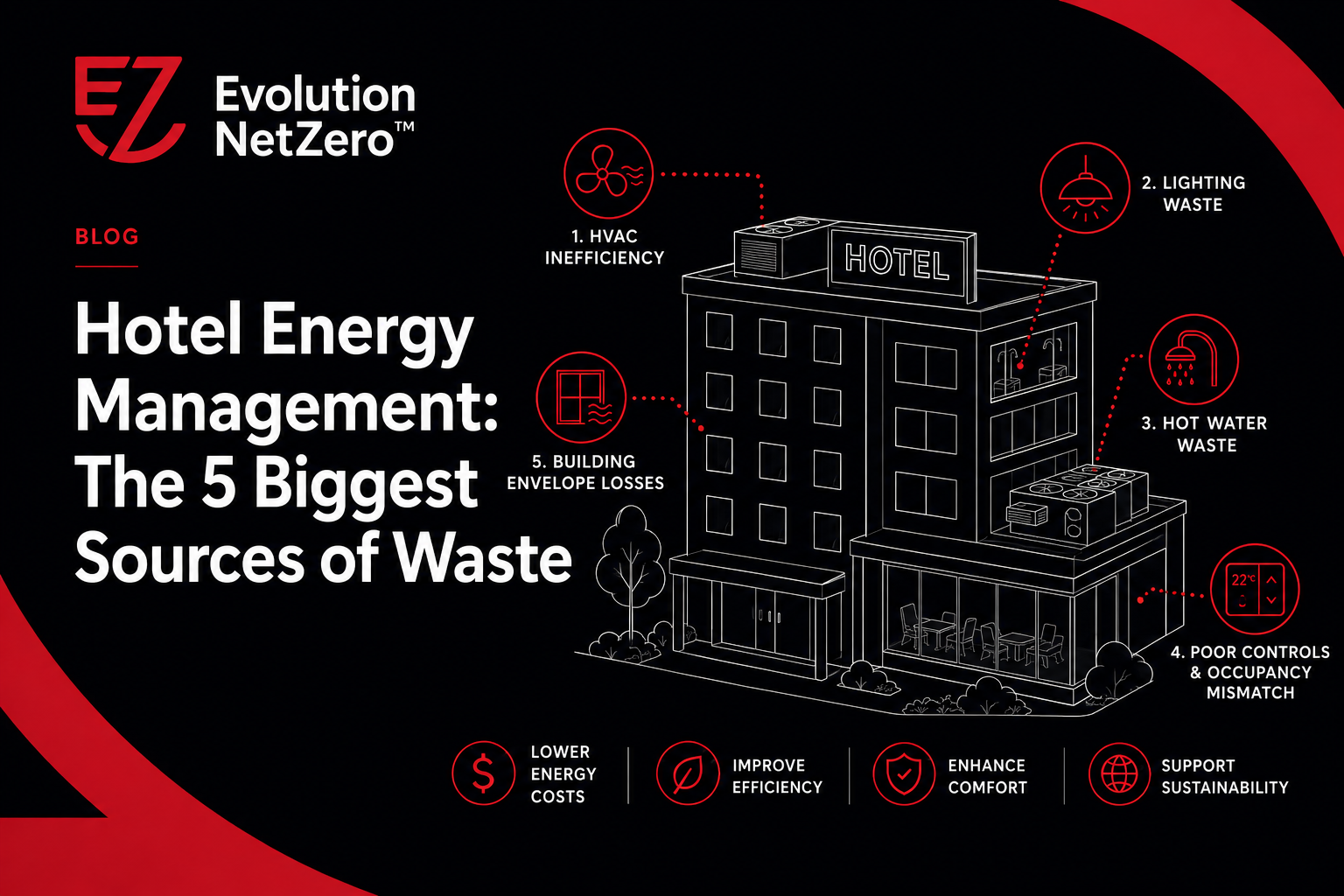
Hotels are among the most energy-intensive buildings in the UK. Energy is typically the second-largest controllable cost after labour, and in most hotels, 20 to 30 percent of that spend is avoidable waste. Here are the five biggest sources, and what can be done about each.
1. Guest Room HVAC: Running Whether Occupied or Not
In most hotels, guest room heating and cooling runs continuously regardless of occupancy. A room vacant for two nights still has its HVAC conditioning the air at full occupancy setpoints. Variable occupancy guest room controls, typically an occupancy sensor linked to the HVAC unit, can reduce guest room energy use by 20 to 40 percent with no impact on guest experience.
2. Corridor and Public Area Heating: Fixed Setpoints, No Occupancy Logic
Hotel corridors are often heated or cooled to the same setpoints as occupied guest rooms, regardless of time of day or actual use. A simple setback schedule, reducing corridor temperatures overnight and during low-occupancy periods, typically saves 8 to 12 percent on HVAC costs without any capital investment.
3. Kitchen Extract: Oversized and Running at Full Speed
Commercial kitchen extract systems are typically sized for peak load and run at full speed regardless of service level. A quiet Monday breakfast generates the same extract energy as a full Saturday dinner service. Variable speed drives on extract fans, matching speed to actual load, typically save 30 to 50 percent on extract energy with a payback of 2 to 3 years.
4. Domestic Hot Water: Temperature Set Too High
Hotel hot water systems are often set at higher temperatures than necessary, partly as a legacy of legionella compliance concerns (which can be addressed without excessive temperatures) and partly because no one has reviewed the settings since installation. Pipework heat losses in long distribution runs add significantly to DHW costs, particularly in older hotel buildings where insulation has degraded.
5. Lighting: Older Technology, No Controls
Hotels that have not upgraded to LED with occupancy controls are paying a significant lighting premium. Car parks, back-of-house corridors and service areas are often the last to be addressed, and frequently the areas with the highest hours of operation and lowest occupancy. LED retrofit with occupancy sensing in back-of-house areas typically pays back inside 24 months.
Where to Start
A hotel energy management programme typically begins with a full energy diagnostic that maps consumption by system and floor, prioritises recommendations by payback period and sets a realistic implementation plan. The priority changes address the highest-cost waste first, making the diagnostic cost straightforward to justify against the identified opportunity.
For hotels in the South West, our Dorset and South West pages have more detail on coverage. Start with a free energy waste report to understand where your hotel is most likely to be wasting energy.
Frequently Asked Questions
What are the biggest sources of energy waste in hotels?
The highest-cost sources of waste in hotels are HVAC systems conditioning guest rooms whether occupied or not, lighting in circulation and back-of-house areas running on fixed schedules, inefficient laundry and kitchen equipment, and hot water systems with long dead-leg pipe runs causing significant heat loss.
How much energy can a hotel typically reduce through better management?
Energy diagnostics for hotels typically identify improvement opportunities of 20 to 40 percent on total energy spend. For a hotel spending £200,000 per year on energy, that represents a substantial identifiable cost reduction, with the actual savings depending on which measures are implemented and at what pace.
Will energy-saving measures disrupt hotel guests?
Occupancy-linked HVAC controls and LED lighting with sensors operate invisibly in the background. Guest comfort is maintained or improved. In many cases, better-controlled environments produce higher guest satisfaction scores because rooms are consistently at the right temperature when occupied.
To understand how we help UK hotels reduce energy waste across HVAC, hot water and controls, visit our hotel energy management service page.
Want to know exactly where your building is wasting energy?
Get a free Cost & Energy Waste Report — a desktop review of your building’s energy use delivered in 3 working days. No site visit. No obligation.
Leave a Reply